A Blueprint for Contraceptive Equity in Illinois

In the face of attacks on reproductive healthcare, it is more important than ever that Illinois continues to lead by example and strengthen proactive and protective policies. Illinois is a leader in promoting and expanding access to reproductive health care, but there’s still an opportunity to build upon the state’s success and move towards more efficient, effective, and equitable reproductive health options. ICAN!’s Contraceptive Equity Blueprint lays out the path for Illinois toward greater contraceptive equity.
Funding for Family Planning:
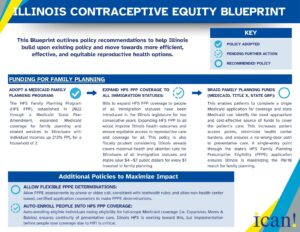
Illinois’ HFS Family Planning Program (HFS FPP) currently helps thousands of Illinoisans get coverage for contraception and related services. However, there is still a large population of Illinois residents who face enrollment barriers: those without qualifying immigration status. Expanding HFS FPP coverage to everyone, regardless of immigration status, is logical, compassionate, and saves state dollars! Illinois already covers maternal health and abortion care for Illinoisians of all immigration statuses, and studies have repeatedly shown that every dollar invested in family planning states saves $4—$7 public dollars. This policy ensures that all people in Illinois can access the care they need to decide if, when, and under what circumstances to be pregnant and parent.
Braiding Medicaid, Title X, and state general revenue funding streams would allow patients to complete a single application for coverage that Illinois Medicaid could review to identify the most appropriate and cost-effective source of funds to cover the patient’s care. Illinois can go even further in reducing barriers to accessing no-cost care by allowing presumptive eligibility determinations to be made via telehealth and auto enrolling eligible individuals losing eligibility for full-scope Medicaid coverage into HFS FPP coverage! Not only would this improve contraceptive equity in the state, but it would ensure there’s no wrong door for patients to access no-cost sexual and reproductive health care.
Expand Contraceptive Access Points:
Contraceptive equity is best supported when patients can access contraceptive care close to home. Did you know Illinois already allows pharmacists to issue, order, and dispense contraception and PrEP for HIV prevention without a doctor’s prescription and requires insurance to cover this service? Great news, but the uptake has been slow.
Incentivizing pharmacists, especially those in medically underserved areas, to provide and bill insurance for this service would be a huge step toward making contraception more accessible.
Access to contraceptive care could be further expanded beyond the pharmacy, too! ICAN!’s Blueprint recommends that a single dose of emergency contraceptive pills and HIV prevention pills be made available at no cost to any patient who presents to the emergency room and requests it. Further, Illinois should review the reimbursement rates for community health centers every year. Regular review of these rates encourages health centers to broaden their scope of care by providing them with confidence that their investments will be reflected in future rate adjustments. This policy could incentivize more health centers to offer a larger variety of services, for example vasectomies.
Transparency and Patient-Centered Care:
True contraceptive equity also requires quality care and transparency. Illinois has already adopted the Contraceptive Care for Women (CCW) performance measure for Managed Care Organizations (MCOs). This data paints a clear picture of just a portion of contraceptive access in the state. However, adding quality measures that capture patient experience data, method mixes, and the percentage of patients screened for contraceptive needs and desire would help Illinois better understand the provision of person-centered contraceptive care.
Finally, Illinois can promote transparency for patients by requiring providers and healthcare systems to name what, if any, contraceptive methods they offer in their IMPACT registration and by adding “family planning” as a Medicaid provider type that is searchable in a provider directory.
Building On Illinois’ Success:
Illinois has certainly laid a strong foundation for contraceptive equity, but there is still potential for building! ICAN!’s Blueprint provides a guide for expanding coverage, streamlining access, and centering patient experience so Illinois can continue progress toward making contraceptive healthcare equitable for all.
Want to learn more/share what you have learned? Click the image below to download ICAN’!s Contraceptive Equity Blueprint in Illinois.
Connect with us!
icancoverall.org