Reproductive Coercion and the Need for Confidential Care
Reproductive coercion is a form of abuse where one person interferes with a partner’s reproductive autonomy through threats, violence, or coercion. It may look like one partner sabotaging the other partner’s birth control by flushing pills or damaging condoms. It may look like coercing or pressuring a partner to get pregnant or, if they become pregnant, to continue or terminate a pregnancy. However it presents, reproductive coercion is serious and widespread. The National Domestic Violence Hotline reported that in 2011, 1 in 4 people calling the hotline reported experiencing reproductive coercion; these reports nearly doubled in the year after the Dobbs decision that ended federal abortion protections. For individuals experiencing this kind of abuse, confidential coverage for sexual and reproductive health (SRH) care can be a key piece of their safety plan.
Unfortunately, survivors with private insurance—especially plans shared with partners or other family members—may face barriers to accessing confidential SRH care through their insurance. Private plans often send explanations of benefits (EOBs) that disclose what care a person received and when. This sensitive information, if received by or accessible to an abusive partner or family member on the policy, can increase the survivor’s risk of retaliation, coercion, or further abuse. To avoid this risk, a survivor may pay out-of-pocket for their care, which can be difficult when the survivor also experiences financial abuse or has limited resources, or foregoes care altogether. When care is delayed or gone without, a survivor may experience an unintended pregnancy or health consequences from untreated sexually transmitted infections.
Medicaid Family Planning Programs (MFPPs) can play an important role in helping survivors access confidential sexual and reproductive health care. They can provide secondary insurance for SRH care that can be billed instead of a survivor’s private plan, ensuring the patient can access care without financial barriers and removing the risk that a patient’s partner or family member can access details about care through an online portal or EOB.
While federal rules require that Medicaid programs, including MFPPs, be the payor of last resort, thus requiring private, third-party insurance (TPL) be billed before Medicaid, there are exceptions for good cause. Further, rules say that Medicaid agencies must excuse beneficiaries from the requirement to identify TPL where doing so “will result in reprisal against, and cause physical or emotional harm to, the individual or other person.” For people experiencing reproductive coercion, using private insurance instead of MFPP coverage for SRH care could result in them experiencing physical or emotional harm, thus justifying a waiver of third-party liability rules.
How can states better protect patient confidentiality when it comes to sexual and reproductive health services?
1. Adopt a “Good Cause” Checkbox on MFPP Applications:
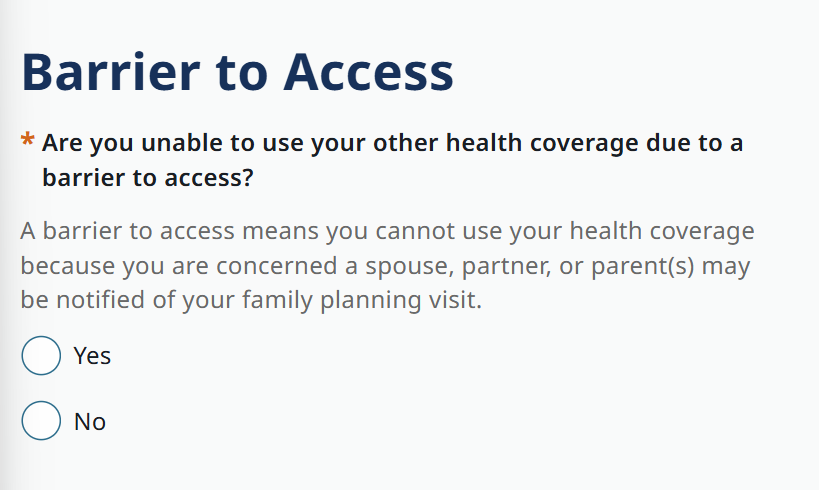
States should include a “good cause” checkbox on their applications for MFPP coverage. This provides an easy, accessible pathway for MFPP applicants who are unsafe using their third-party coverage for SRH to disclose this to the state agency and ensure their information remains confidential. California includes the following option on their MFPP application:
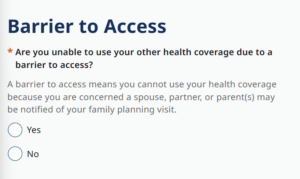
Image Source: California Family PACT Application, available at https://apply.fpact.dhcs.ca.gov/.
Without an option like this, applicants may be forced to navigate complex administrative requirements, disclosing sensitive information repeatedly, or discover that there is no process for claiming a good cause exception to TPL rules. A checkbox on the application clearly and efficiently delivers necessary information to the correct agency, reducing unnecessary disclosures and ensuring that the survivor can access confidential coverage without unnecessary barriers.
2. Create a Dedicated Process for Claiming a Good Cause Exception to TPL at the Point of Care:
Even where a state has a checkbox for applicants to identify that they have good cause to bypass TPL rules, some patients may present at the clinic with both MFPP and private insurance already on file. In situations like these, providers need a clear pathway to alert the Medicaid agency that MFPP coverage should be the primary payor, despite TPL on file.
States should establish a dedicated hotline and secure email address that providers can use to alert the state agency of a patient claiming a good cause exception to TPL rules. This process should allow providers to quickly obtain guidance and authorization to provide the patient with confidential, MFPP-covered care.
Policies are only effective when providers can implement them, and resources like dedicated hotlines and email addresses are only helpful when providers know they exist. States should develop clear, accessible guidance on confidential billing and TPL overrides and include it in Medicaid provider handbooks and provider bulletins, or wherever Medicaid providers in the state routinely access information about state Medicaid program policies and procedures.
3. Suppress Medicaid EOBs about SRH care:
Sexual and reproductive health care information is often sensitive. Medicaid agencies should suppress EOBs for SRH care provided under any Medicaid program, including MFPPs to ensure that private information is not being disclosed to anyone other than the patient. This protects confidentiality and means that patients do not have to identify alternative addresses in which to send information about their reproductive health care.
Connect with us!
icancoverall.org